
Why Flood Insurance Isn’t Just for Beachfront Condos Anymore
You bought a condo in California. Maybe it’s a cozy place in Pasadena, a vibrant unit in San Diego, or a quiet spot up in Sonoma County. You’ve got your homeowners’ association (HOA) dues, your standard condo insurance policy, and you probably feel pretty secure. But here’s the thing: floods aren’t just a problem for properties right on the Pacific Ocean. Not always.
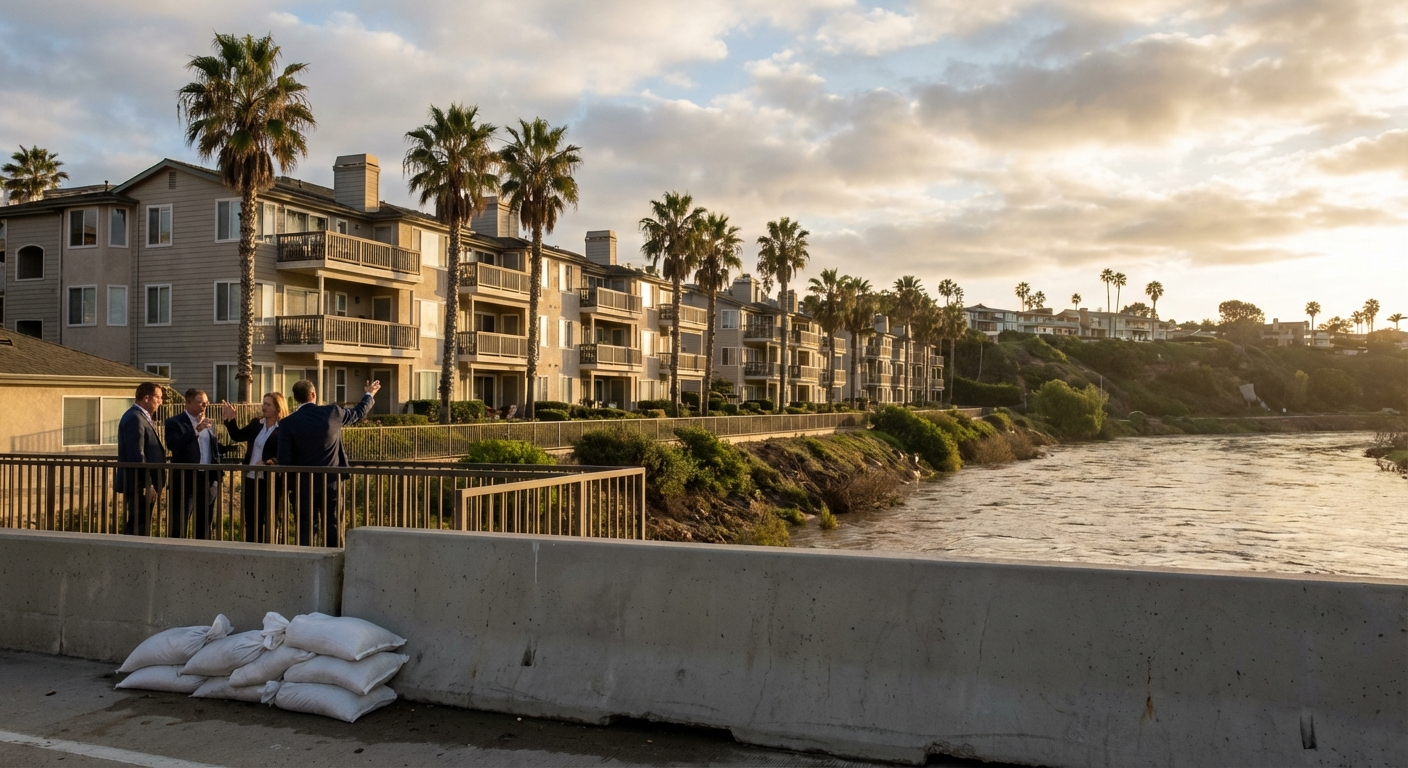
Many California condo owners are surprised to learn they might need flood insurance, even if they’re miles from the coast or a major river. After a few years of intense atmospheric rivers, like the ones that drenched us in 2023 and early 2024, knocking out roads and turning suburban streets into temporary waterways, people are waking up. The old maps, the ones that told you if you were in a “flood zone,” well, they don’t always tell the whole story anymore.
You Think Your HOA Policy Covers Everything? Think Again.
For most condo owners, there’s a basic misunderstanding about what their HOA’s master insurance policy covers. It’s easy to assume that big, expensive policy handles anything that goes wrong with the building. And for the building’s structure — the roof, the exterior walls, the common areas — you’re probably right.
But here’s where it gets interesting. That master policy almost certainly doesn’t cover what’s *inside* your individual unit. Your furniture, your clothes, your appliances, your personal keepsakes – if floodwaters surge into your living room, those items are on you. That’s a big difference. That’s your personal property, and it needs its own protection.
Which brings up something most people miss. Even if the HOA’s master policy *does* have flood coverage (and many don’t, or they have very high deductibles that would be passed on to unit owners), it’s focused on the building itself. It won’t pay to replace your ruined sofa or the water-damaged electronics in your bedroom.

What Exactly Counts as a “Flood” Anyway?
This is a common point of confusion. Many folks think of a flood as a massive river overflowing or the ocean surging inland. And yes, those are floods. But the definition for insurance purposes is broader.
Basically, a flood is general and temporary condition of partial or complete inundation of two or more acres of normally dry land area or of two or more properties (one of which is yours) from:
* Overflow of inland or tidal waters.
* Unusual and rapid accumulation or runoff of surface waters from any source.
* Mudslides or mudflows.
* Collapse of land along the shore of a lake or similar body of water as a result of erosion or undermining caused by waves or currents of water exceeding anticipated cyclical levels.
So, if heavy rains overwhelm local drainage systems in the Inland Empire and water pours into your ground-floor unit, that’s a flood. If a levee breaks near Sacramento and your condo complex ends up underwater, that’s a flood. Even if the water comes from a clogged storm drain right outside your building, it can be considered a flood if it meets those criteria.
But wait — what if your upstairs neighbor leaves their tub running and it floods your unit? Or a pipe bursts inside your walls? That’s generally *not* a flood. That’s an internal water damage event, usually covered by your standard HO-6 condo policy, assuming it’s not due to neglected maintenance. Big difference.
Understanding the Two Main Types of Flood Insurance
When you’re looking for flood insurance for your California condo, you’re usually looking at two main options:
The National Flood Insurance Program (NFIP)
This is the federal program, managed by FEMA. For many years, it was the only real game in town. NFIP policies are standard, meaning the coverage is the same no matter which insurance company sells it to you. Most standard home insurers can write an NFIP policy for you.
The NFIP has caps on coverage. For a condo unit, you can typically get up to $250,000 for building coverage (which would apply if you’re responsible for rebuilding your unit’s interior structure, like walls and floors) and up to $100,000 for personal property coverage. If your condo is worth more, or your belongings are extensive, that might not be enough.
Recently, the NFIP rolled out something called Risk Rating 2.0. This changed how they calculate premiums. It aims to make rates more reflective of actual flood risk for individual properties, rather than relying so much on broad flood zones. For some condo owners, this has meant lower premiums. For others, particularly in areas like parts of Ventura County that have seen increased flood risk, premiums jumped significantly, sometimes 30% or 40% between 2022 and 2024. It’s a mixed bag, and it’s certainly made things more confusing for many.
Private Flood Insurance
Over the past few years, a private flood insurance market has really grown. These are policies offered by private insurance companies, not the government. They often offer higher coverage limits than the NFIP, which can be a big plus for high-value condos or owners with lots of expensive personal property.
Private policies can also be more flexible. They might offer coverage for things like additional living expenses if you have to move out during repairs, or basement contents, which the NFIP often limits. Sometimes, they can even be more affordable than NFIP policies, especially if your property is deemed lower risk by the private market’s own models.
But here’s the catch: the private market is just that – private. Rates can vary wildly between companies like State Farm, AAA, or Farmers, and not every insurer offers private flood in every area. Finding the right private policy often requires a bit more digging and the help of an independent agent.
Factors That Drive Your Flood Insurance Premium
You’re probably wondering, “How much is this going to cost me?” That’s a fair question, and honestly, it varies a lot. Three things drive your premium up:
1. **Your specific flood risk:** This is the biggest one. FEMA’s flood maps still play a role, but with Risk Rating 2.0 and private insurers’ own models, they look at things like your condo’s elevation, the type of foundation the building has, and its distance from water sources. Is your unit on the ground floor or the third floor? That makes a difference.
2. **Coverage limits and deductibles:** The more coverage you want for your building and personal property, the higher your premium. Also, choosing a lower deductible (the amount you pay out of pocket before insurance kicks in) will increase your premium.
3. **The age and type of your building:** Newer buildings constructed to higher flood resistance standards might see lower rates. Older buildings, especially those built before modern flood regulations, can be more expensive to insure.
It’s easy to feel overwhelmed by all these details. You’re not alone if this sounds confusing. Insurance, especially flood insurance, has its own language.
What to Do If You’re Concerned or Confused
If you’re a California condo owner and you’re thinking, “Do I need this? How do I even get it?” then you’re asking the right questions. The first step is to really understand your current situation.
Talk to your HOA board or property manager. Ask them for a copy of the master insurance policy and specifically inquire about flood coverage for the building. They should be able to tell you if the complex is in a flood zone according to current maps and what, if any, flood protection the HOA has in place.
Then, look at your own HO-6 policy. See what it says about water damage from external sources. Chances are, it excludes flood.
Honestly, the best way to cut through the confusion is to speak with an experienced insurance professional. Someone who understands the unique challenges of California insurance, from the shifting landscape of policies to the increasing frequency of natural events.
Karl Susman of California Condo Protection, CA License #0B75129, has spent years helping Californians make sense of their insurance options. He’s seen firsthand the heartache and financial ruin that floods can cause, and he’s equally familiar with the frustration of trying to find the right coverage in a complex market. He can help you figure out if an NFIP policy is right for you, or if a private flood policy might offer better protection or value.
It’s not about scare tactics; it’s about being prepared. California’s weather patterns are changing. What was once considered a “100-year flood” event seems to be happening with unsettling regularity. Protecting your condo, and everything in it, is simply a smart move.
Ready to explore your options and get some peace of mind? Don’t wait until the next big storm. You can connect with Karl and his team directly to discuss your specific needs. Get a quote and start protecting your investment today: https://californiacondoprotection.com/get-a-quote/
Thinking about this now, before an emergency, is the smart play. A quick conversation can clarify so much. Why wonder when you can know? For immediate assistance, you can also call California Condo Protection at (877) 411-5200.
Frequently Asked Questions About Condo Flood Insurance in California
Does my HOA master policy cover flood damage to my individual condo unit?
No, almost certainly not for your personal belongings. While the HOA policy might cover flood damage to the building’s structure and common areas, it typically won’t cover your personal property inside your unit, like furniture, appliances, or clothes. You need your own flood policy for that.
My condo is on the third floor. Do I still need flood insurance?
You might. While your unit itself is less likely to be inundated by ground-level flooding, the building’s foundation and lower floors could still be damaged. This damage can affect the structural integrity of the entire building, potentially making it uninhabitable and requiring costly repairs that could lead to special assessments from your HOA. Your personal property on the third floor is safer from *ground* floods, but the building’s habitability and your financial responsibility could still be impacted.
Is flood insurance expensive in California?
The cost varies greatly depending on your specific location, the building’s elevation, the type of coverage you choose, and your deductible. With recent changes like NFIP’s Risk Rating 2.0, some areas have seen increases, while others have seen decreases. Private flood insurance options can also offer competitive pricing. The only way to know for sure is to get a personalized quote.
Can I get flood insurance even if I’m not in a high-risk flood zone?
Yes, absolutely. In fact, many floods happen outside of designated high-risk zones. About 25% of all flood insurance claims come from moderate- to low-risk areas. You can purchase flood insurance regardless of your flood zone designation, and it’s often more affordable if you’re in a lower-risk area.
This article is for informational purposes only and does not constitute financial advice.