
When Water Goes Wild: Understanding Condo Insurance and That Pesky Leak
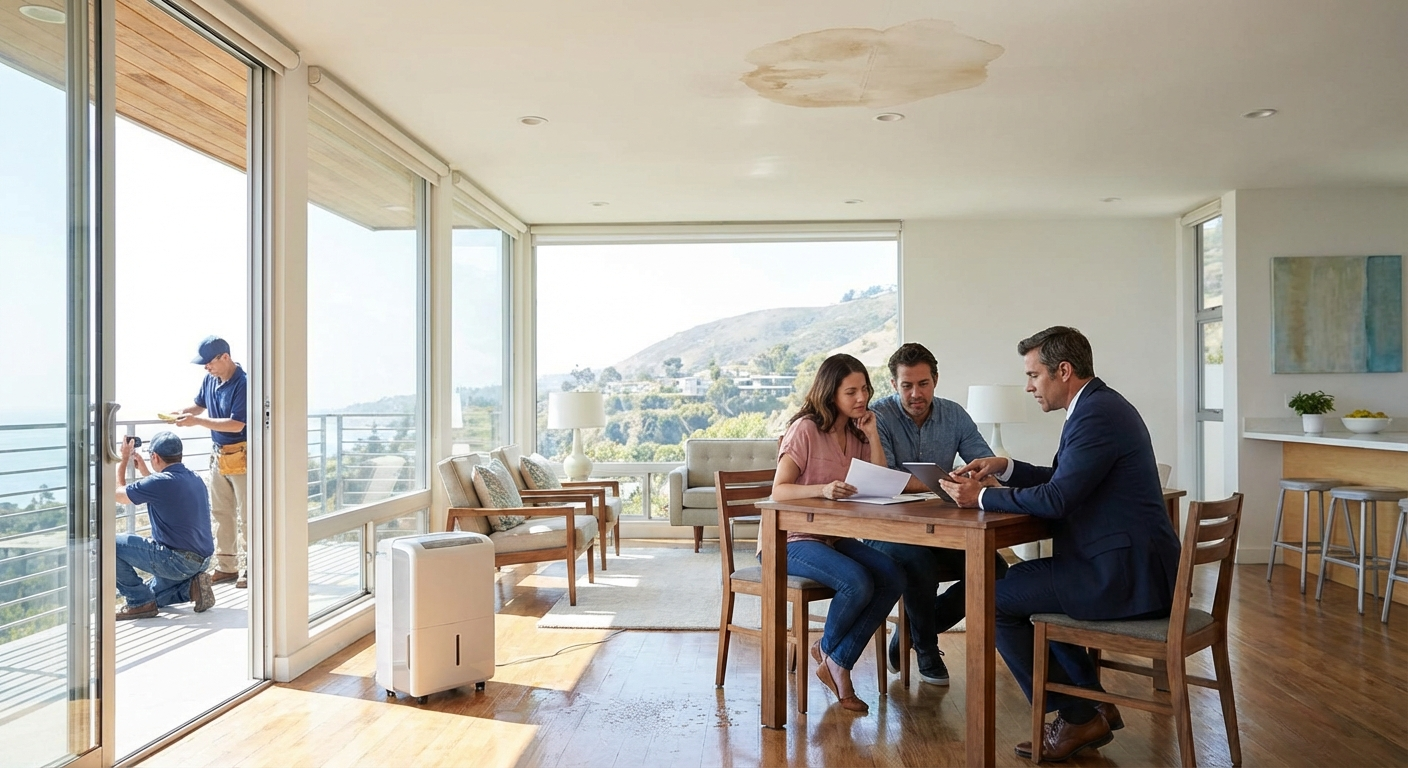
Imagine coming home after a long day in, say, downtown San Diego, only to step into a small puddle in your living room. Then you look up. The ceiling’s got a dark, growing stain. Or maybe you’re in a high-rise in Santa Monica, and your dishwasher decides to stage a rebellion. Water damage. It’s not just annoying; it can be incredibly expensive. And when you live in a condo, figuring out who pays for what can feel like trying to untangle a bowl of spaghetti.
You own your unit, sure. But you also share walls, floors, and ceilings with neighbors. The building itself is managed by an HOA. So, if water starts pouring from the unit above yours, or a pipe bursts in a common wall, whose insurance policy steps up? Your HO-6 policy? The HOA’s master policy? Both? This is where it gets complicated, and honestly, a lot of condo owners in California don’t fully grasp the distinctions until they’re literally dealing with a wet mess.
Your HO-6 Policy: Protecting Your Personal Space
Let’s start with your HO-6 policy, often called “walls-in” coverage. This is your personal condo insurance policy. It’s designed to protect what’s *inside* your unit – your personal belongings, like furniture, electronics, clothes, and art. Think about all your stuff. This policy also covers the parts of your unit that you’re typically responsible for maintaining. That usually means your interior walls, flooring, cabinetry, fixtures, and sometimes even built-in appliances.
But here’s where it gets interesting. If your upstairs neighbor’s overflowing tub sends water cascading into your unit, your HO-6 policy would often cover the damage to your hardwood floors, your painted walls, and your soaking wet sofa. It’s a lifesaver in those kinds of situations. Without it, you’d be footing the bill for a lot of repairs and replacements.

The HOA Master Policy: The Big Picture Protector
Every condo association has a master insurance policy. This policy covers the common areas of the building – hallways, lobbies, fitness centers, roofs, exterior walls, and shared plumbing systems. It also covers the building’s overall structure.
But the exact scope of the HOA’s master policy can vary wildly. This is where you really need to pay attention, especially when it comes to water damage. Most master policies come in one of two flavors:
1. **Bare Walls-In (or Studs-Out):** This is the most common and, frankly, the trickiest for condo owners. It means the HOA policy only covers the bare structure of your unit – the studs, the drywall (but not the paint or wallpaper), and the basic plumbing and electrical *within the walls*. Anything beyond that – your fancy kitchen cabinets, your custom tile, your high-end flooring – that’s on you. If a pipe bursts in a common wall, the HOA might fix the pipe and the studs, but you’re probably paying for everything else.
2. **All-In (or All-Inclusive):** This type of policy is less common but much better for unit owners. It covers the original fixtures and finishes inside your unit, including things like standard cabinets, countertops, and flooring. If a common pipe bursts and damages your kitchen, an all-in policy might cover the cost to restore it to its original condition. However, any upgrades you’ve made? Your custom granite counters, your designer backsplash? Those would still fall to your HO-6 policy.
You might be thinking, “Well, which one do *I* have?” Good question. You won’t find the answer on a general insurance website. You have to read your HOA’s Covenants, Conditions, and Restrictions (CC&Rs) and the master policy declaration. Seriously, dig them out. They dictate what you’re responsible for and what the HOA covers.
When Water Damage Gets Tricky: Who’s At Fault?
Let’s say a pipe bursts in a common wall in your building in Ventura County. The HOA’s master policy generally covers the damage to the structure. But if the water makes its way into your unit, damaging your personal property and interior finishes, your HO-6 policy would kick in. Here’s where it gets complicated: If the HOA’s policy has a high deductible – say, $10,000 or even $25,000 – the HOA might assess that deductible back to the unit owners, especially if it’s determined to be a common cause. Your HO-6 policy often has a “loss assessment” coverage that can help pay for your share of that deductible. That’s a really important coverage to have, especially in California, where building repair costs are no joke.
Now, what if the water damage comes from your upstairs neighbor’s unit? Maybe their washing machine hose failed. In an ideal world, their liability insurance would pay for your damages. But sometimes, they don’t have enough coverage, or it’s a slow, agonizing process to get them to pay. Your HO-6 policy can step up here, covering your damages. Then your insurance company might pursue your neighbor’s insurance company to get reimbursed. It’s called subrogation, and it’s how they try to get their money back.
California’s Shifting Sands: What You Need to Know Now
The insurance landscape in California has been, to put it mildly, a rollercoaster. We’ve seen major carriers like State Farm and Farmers pull back from writing new policies in some areas. AAA has also made changes. This isn’t just about wildfires, though those are a big part of it. It’s about the overall risk assessment in the state – everything from repair costs to liability claims.
What does this mean for your condo insurance and water damage coverage? Premiums have jumped for many people, sometimes 30-50% between 2022 and 2024. It’s also become harder to find certain coverages or to get an HO-6 policy if your HOA’s master policy isn’t up to snuff. Some insurers are scrutinizing HOA master policies more closely before they’ll even consider insuring individual units. If your HOA has a high deductible, it can make your HO-6 policy harder to place or more expensive.
This isn’t just an issue in high-fire risk areas. Even in the Inland Empire or the Valley, older condo complexes with aging infrastructure face increasing challenges. Insurers are looking at the age of plumbing, the claims history of the complex, and the maintenance schedule.
Common Water Damage Exclusions: Don’t Get Caught Off Guard
Not all water damage is covered, and this is a big one.
* **Flooding:** This is the classic exclusion. Water that comes from *outside* the building and rises to meet your property – think heavy rains causing a river to overflow, or a storm surge – that’s flood damage. It’s only covered by a separate flood insurance policy, usually through the National Flood Insurance Program (NFIP). Your standard HO-6 won’t touch it.
* **Sewer and Drain Backup:** If your toilet backs up or a sewer line clogs and sends water into your unit, your standard HO-6 policy usually won’t cover it. You need to add a specific “sewer and drain backup” endorsement to your policy. Given the aging infrastructure in many California cities, this is a smart add-on.
* **Gradual Leaks:** This one can really sting. If a pipe has been slowly dripping behind a wall for months, causing rot and mold, your insurance company might deny the claim. Why? Because they’ll argue it was a maintenance issue you should have addressed. Insurance is for sudden, accidental damage, not long-term neglect. So, if you see a small stain, don’t wait! Get it checked out immediately.
What to Do Next: Your Action Plan
Honestly, the most important thing you can do is be proactive.
1. **Read Your HOA Docs:** I know, it’s boring. But seriously, read your CC&Rs and the HOA’s master policy. Understand if it’s “bare walls-in” or “all-in.” Know what your HOA’s deductible is.
2. **Review Your HO-6 Policy:** Make sure your HO-6 coverage limits are high enough to replace all your personal property and to rebuild the interior of your unit, accounting for any upgrades you’ve made. Check your loss assessment coverage. Make sure you have that sewer and drain backup endorsement.
3. **Talk to Your Agent:** An experienced agent who specializes in California condo insurance, like Karl Susman at California Condo Protection (CA License #OB75129), can help you make sense of all this. They can help you compare your HOA’s policy with your HO-6 and identify any gaps. They’ve seen it all, from burst pipes in San Francisco Victorians to leaky roofs in Orange County complexes.
Getting the right coverage can prevent a water disaster from becoming a financial disaster. Don’t wait until the water’s already pooling.
Ready to make sure your California condo is properly protected from water damage and other risks? It’s easier than you think to get started.
Click here to get a personalized quote for your California condo insurance today.
Frequently Asked Questions About Condo Water Damage Coverage
Q: My HOA master policy has a really high deductible. What does that mean for me?
A: A high HOA deductible, like $10,000 or more, means that in the event of a common cause of damage (like a burst pipe in a shared wall), the HOA might assess that deductible amount back to the unit owners. Your HO-6 policy’s “loss assessment” coverage can help pay for your share of that assessment. It’s a critical part of your personal condo policy.
Q: If my neighbor’s overflowing sink damages my unit, do I file a claim with my HO-6 or their insurance?
A: Generally, you’d file a claim with your own HO-6 policy first. Your insurer will pay for your damages, and then they’ll often pursue your neighbor’s liability insurance to get reimbursed. This process, called subrogation, is usually faster and less stressful for you than trying to deal directly with your neighbor’s insurer.
Q: Does my condo insurance cover mold?
A: Most HO-6 policies will cover mold damage if it results from a covered peril, like a sudden burst pipe. However, if the mold is due to a long-term, gradual leak or poor maintenance that you were aware of (or should have been aware of), it’s typically excluded. That’s why addressing any water issues immediately is so important.
Q: I rent out my condo. Does my regular HO-6 policy cover water damage if my tenants cause it?
A: If you rent out your condo, you’ll likely need a different type of policy, often called a “dwelling fire” or “landlord” policy (DP-3 or DP-1). A standard HO-6 policy is for owner-occupied units. A landlord policy provides coverage for the building structure and your personal property within the unit that you provide for the tenant, and also includes liability coverage for you as the landlord. Your tenants would need their own renters insurance (HO-4) to cover their personal belongings.
Understanding your California condo insurance doesn’t have to be a headache. Get the right information and the right policy.
Get a free, no-obligation quote today and protect your California condo.
This article is for informational purposes only and does not constitute financial advice.