
What You’ll Learn
- Why pet liability matters for California condo owners.
- How your condo association’s master policy interacts with your personal coverage.
- What your HO-6 condo insurance policy actually covers when your pet causes trouble.
- The often-tricky reality of dog breed restrictions and their impact on your insurance.
- Practical steps to protect yourself, your finances, and your beloved animal.
- How to find the right insurance for your California condo and your furry companion.
Understanding Your California Condo and Your Furry Friend’s Place in It
California living often means condo living. It’s a popular choice, especially in our denser cities and along the coast. Many of us share our homes with pets – a loyal dog, a curious cat, maybe even something more exotic. But here’s where it gets interesting: owning a pet in a condo brings a unique set of insurance questions, especially when it comes to liability. You might think your condo association’s insurance has you covered, or that your pet would never cause real damage. Think again. The financial risks can be enormous, reaching into the hundreds of thousands of dollars if something goes wrong.

Step 1: Know Your Condo Association’s Master Policy
Every condo association in California has a master insurance policy. It’s a big, thick document, and it covers the building itself, common areas like hallways, gyms, and pools, and sometimes even the original fixtures inside your unit. This policy protects the association from lawsuits if, say, someone slips on a wet floor in the lobby. But here’s the thing: that master policy almost never covers your personal liability. Not for you, and certainly not for your pet. If your dog nips a neighbor in the elevator, or worse, causes a serious injury, the HOA’s policy won’t step in to pay the medical bills or legal fees.
Your association’s Covenants, Conditions, and Restrictions (CC&Rs) also play a big part. Most HOAs have specific rules about pets – size limits, breed restrictions, leash requirements, even quiet hours for barking. Breaking these rules could lead to fines from the HOA, but more importantly, it could complicate your personal insurance claim if an incident occurs. For example, if your dog, known to be aggressive, was off-leash in a common area against HOA rules and bit someone, your insurer might look less favorably on covering the claim. You’ll want to read those CC&Rs carefully.
Step 2: Grasping Your HO-6 Policy’s Role – Especially for Pet Liability
This is where your personal condo insurance policy – often called an HO-6 policy – becomes absolutely essential. Think of it as your safety net. While the master policy covers the building, your HO-6 policy covers what’s inside your unit (your personal belongings), structural improvements you’ve made, and, critically, your personal liability. This liability coverage is the part that kicks in if you’re found responsible for someone else’s injury or property damage. And yes, that includes incidents caused by your pet.
So, if your dog gets excited and knocks over a guest, causing them to break an arm, your HO-6 liability coverage could pay for their medical expenses. If your cat scratches a neighbor’s antique sofa while visiting, the same coverage might handle the repair or replacement costs. These policies typically start with liability limits around $100,000, but many California condo owners opt for $300,000 or even $500,000. Why? Because medical costs, especially in places like Ventura County or the Bay Area, can skyrocket. Legal fees add up fast, too. The short answer is, you want as much liability coverage as you can reasonably get. It’s often the most valuable part of your policy.
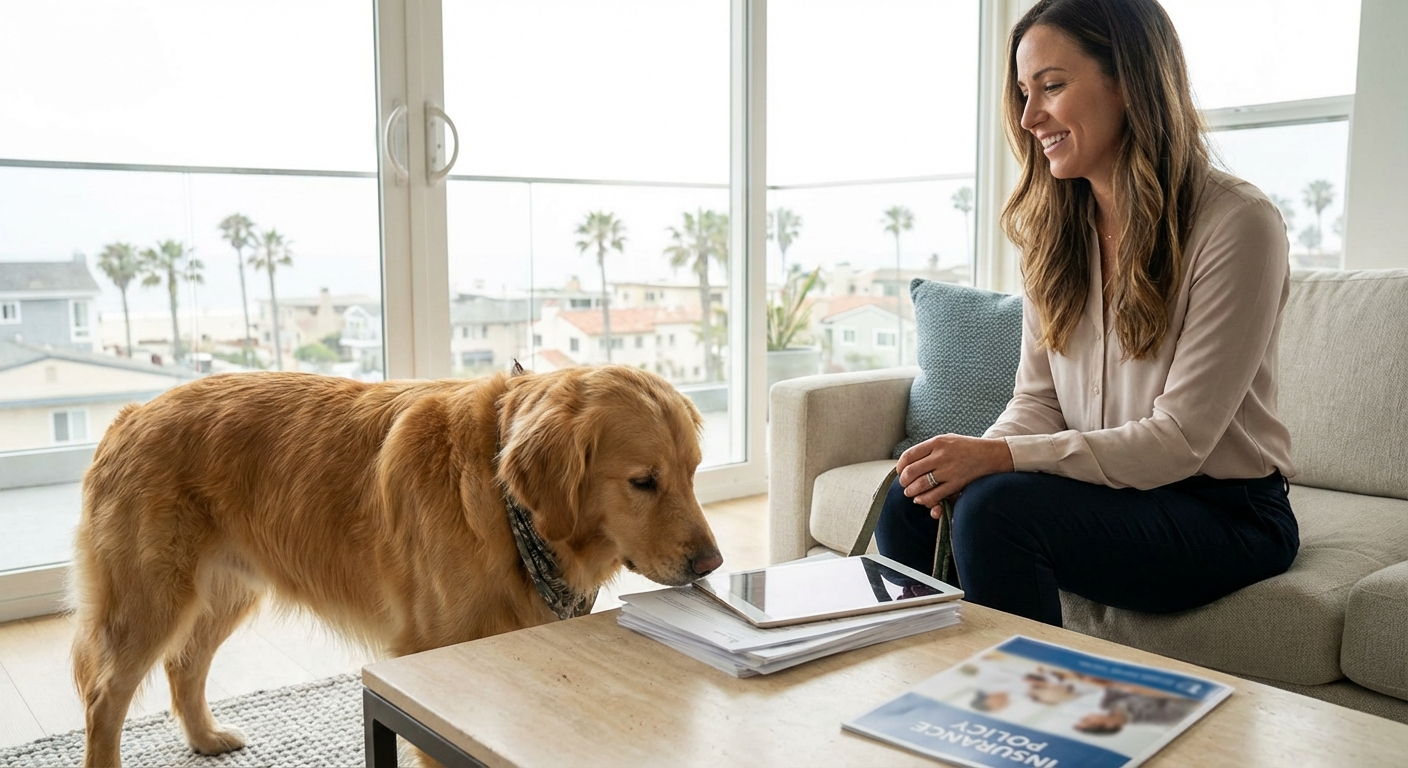
Step 3: The “Risky” Breeds – A California Reality Check
Now, let’s talk about the elephant in the room – or rather, the dog. Certain dog breeds carry a higher risk in the eyes of insurance companies. It’s not about whether your specific dog is a sweetheart; it’s about statistics and claims data. Insurers, like State Farm, AAA, or Farmers, track which breeds are involved in the most bite claims or cause the most significant injuries. Because of this, many insurers have “restricted breed” lists.
Common breeds on these lists include Pit Bulls, Rottweilers, German Shepherds, Doberman Pinschers, Chows, Akitas, Alaskan Malamutes, and Siberian Huskies. If you own one of these breeds, you might find it harder to get coverage, or your premiums could be significantly higher. Some insurers might even deny coverage altogether or specifically exclude pet liability from your policy if you own a restricted breed. This isn’t just an urban myth; it’s a real factor for many California pet owners. If you’re struggling to find traditional coverage, don’t despair. Some specialty insurers or the California FAIR Plan (though primarily for property, it’s part of the broader CA insurance picture) might offer options, or you might need to look into a separate animal liability policy. Sometimes, a well-trained dog with a Canine Good Citizen certificate can help, but it’s not a guarantee.
Step 4: What Happens When Your Pet Causes Trouble? The Claims Process
Imagine this: your normally calm dog, spooked by a loud noise, nips a delivery person on your doorstep. Suddenly, you’re facing a potential claim. What happens next? First, the injured party will likely seek medical attention. Then, they might contact an attorney, especially if the injury is severe. Their lawyer will probably send you a demand letter, seeking compensation for medical bills, lost wages, pain and suffering, and possibly even future medical care. This is where your HO-6 policy’s liability coverage steps in.
You’ll report the incident to your insurance company. They’ll investigate, gather statements, and assess the damages. If the claim is legitimate and covered by your policy, your insurer will work to negotiate a settlement. If it goes to court – and many do in California, a state known for its legal battles – your insurance company will provide legal defense, up to your policy’s liability limits. Without adequate coverage, these costs could fall directly on you. A serious dog bite can result in six-figure settlements, especially with reconstructive surgery or psychological trauma involved. This isn’t just about a scratch; it’s about potential life-altering injuries and the financial fallout that follows. That’s why having enough liability coverage isn’t a luxury; it’s a necessity.
Step 5: Strategies for Smart Pet Ownership and Insurance Protection
Protecting your pet and your finances means being proactive. First, consider training and socialization. A well-behaved dog is less likely to cause trouble. Puppy classes aren’t just cute; they’re an investment in preventing future incidents. Second, always follow local leash laws and your HOA’s rules. If you live in a busy area like downtown San Diego or the Valley, keeping your pet secure is paramount. A simple escape can lead to a world of trouble.
Which brings up something most people miss: regularly review your HO-6 policy. Your life changes, your pet gets older, and insurance markets shift. Premiums for all types of insurance have jumped significantly in California, with some areas seeing 30-40% increases between 2022 and 2024. Don’t just set it and forget it. A quick call to your agent once a year can ensure your coverage still fits your needs. Also, consider an umbrella policy. This extra layer of liability protection sits on top of your HO-6 and auto insurance, offering an additional $1 million or more in coverage for a relatively low annual cost. It’s often the best defense against catastrophic lawsuits, especially if you have significant assets to protect.
Step 6: Finding the Right Coverage for Your California Condo
Finding the right condo insurance with solid pet liability coverage in California can feel like a puzzle. With so many insurers pulling back from the state or raising rates, it’s more challenging than ever. But it’s not impossible. This is where working with an independent insurance agent really pays off. They don’t work for just one company; they work with many, allowing them to compare policies and find the best fit for your specific situation – including your beloved pet.
An experienced agent understands the nuances of California’s insurance market, including which carriers are more pet-friendly or have fewer breed restrictions. They can help you understand your HO-6 policy limits, explain how an umbrella policy works, and ensure you’re not unknowingly exposed to massive financial risk. For personalized guidance and to explore your options, you can connect with Karl Susman at California Condo Protection, CA License #0B75129. Don’t leave your pet’s potential liability to chance. Get a quote today and secure your peace of mind. Get Your Condo Insurance Quote Here!
Common Questions About Pet Liability & Condo Insurance in California
Does my HOA’s insurance cover my dog if it bites someone in the common area?
Almost certainly not. Your condo association’s master policy covers liability for the association itself – for instance, if a common area is poorly maintained and someone gets hurt. It does not cover your personal liability if your pet causes an injury, even if that incident happens in a shared space like an elevator or the dog park. That responsibility falls squarely on you, and thus, on your personal HO-6 condo insurance policy’s liability section.
What if my dog causes damage inside my own condo?
If your dog chews up your own sofa, scratches your floors, or has an accident on your carpet, your HO-6 policy typically won’t cover the damage. Insurance is designed for sudden, accidental losses, not for wear and tear or damage your own pet causes to your own property. You’re responsible for keeping up your own unit. However, if your dog damages a neighbor’s property – say, by chewing through a shared wall – then your liability coverage might kick in.
Are there any insurance companies in California that don’t have breed restrictions?
Yes, some insurance companies in California are more lenient about breed restrictions than others. While many major carriers have lists of “restricted breeds,” a few companies take a different approach, focusing instead on an individual dog’s bite history or behavior. An independent agent, like Karl Susman, often has access to these more pet-friendly insurers and can help you find one that fits your needs, even if you own a breed commonly considered “high-risk.”
How much liability coverage do I really need?
For most California condo owners, a minimum of $300,000 in personal liability coverage on your HO-6 policy is a good starting point. Many financial advisors recommend $500,000 or even $1 million, especially if you have significant assets (a nice car, savings, investments) to protect. Why so much? A serious dog bite incident can easily lead to medical bills, lost wages, and pain and suffering claims that exceed basic liability limits. Legal fees alone can be staggering. An umbrella policy can provide an additional layer of protection, often starting at $1 million, for a surprisingly affordable premium.
What’s an umbrella policy and do I need one?
An umbrella policy is an extra layer of liability insurance that sits on top of your existing home (HO-6) and auto insurance policies. It provides additional coverage beyond the limits of those underlying policies. For example, if you have $300,000 in liability on your HO-6 and your dog causes a $700,000 lawsuit, your umbrella policy would cover the remaining $400,000 after your HO-6 limit is exhausted. Many California condo owners find them invaluable for peace of mind, especially given the high cost of litigation and medical care in the state.
Your Next Step to Protecting Your Home and Your Best Friend
Don’t let the complexities of California condo insurance and pet liability leave you exposed. Your pet is family, and protecting them – and yourself – from unexpected financial burdens is a smart move. Take the time to understand your coverage, review your options, and make sure you have the right protection in place. It’s a small investment for a lot of peace of mind. Get started today. Click here to get your personalized condo insurance quote.
This article is for informational purposes only and does not constitute financial advice.