
The Big Picture: Why Your “Home Insurance” Isn’t Always What You Think
Many people lump all residential property coverage under the umbrella term “home insurance.” Honestly, it’s a pretty common mistake. You own a place, you need insurance for your home, right? The short answer is yes. The real answer is more complicated, especially here in California. If you live in a detached house with your own yard, you’re looking at one kind of policy. But if you own a condo, it’s an entirely different beast. A really different beast.
Think of it this way: When you buy a traditional house in, say, Ventura County, you own the land, the roof, the walls, the foundation – everything. Your homeowners insurance policy, often called an HO-3, covers all of that. It protects the physical structure of your house, your personal belongings inside it, and provides liability coverage if someone gets hurt on your property. It’s a pretty all-encompassing shield.
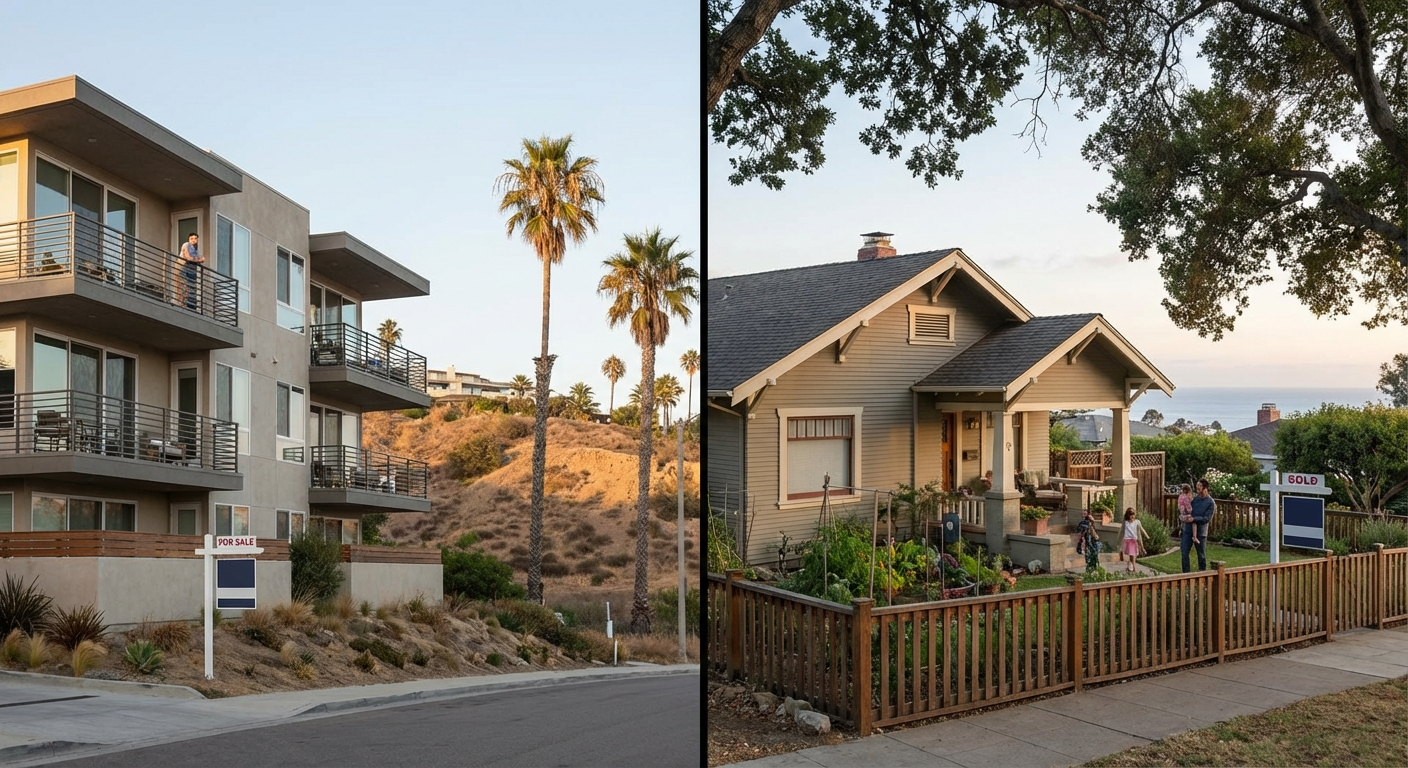
But here’s where it gets interesting. Condos are different. Really different. When you buy a condo unit, you own the space *inside* your walls, sometimes from the studs in, sometimes just the finished surfaces. You don’t own the land. You don’t own the roof above you. You don’t own the exterior walls or the common areas like the gym, the pool, or the hallways. Those belong to the Homeowners Association (HOA) and all the unit owners collectively. That distinction changes *everything* about the insurance you need.
Myth: My HOA’s Insurance Covers My Condo Completely
This is probably the biggest misconception out there, and it can leave condo owners in a world of hurt after a disaster. Your HOA *does* have a master insurance policy. It absolutely does. But what that policy actually covers varies wildly, and it almost certainly doesn’t cover everything *you* need protection for.
Most HOA master policies fall into one of three categories:
* **”Bare Walls-In” or “Walls-Out”:** This is the most common and, frankly, the riskiest for you as a unit owner. The HOA policy covers the structure of the building, the common areas, and everything outside your unit’s bare walls. Think the framing, the plumbing and electrical *within* the walls, and the roof. *It doesn’t cover anything inside your unit.* Not your drywall, not your flooring, not your cabinets, not your appliances. Definitely not your clothes or furniture.
* **”Single Entity” or “Original Specifications”:** A bit better. This policy covers the structure, common areas, and the original fixtures and finishes inside your unit as they were when the building was first constructed. So, the basic cabinets, the standard flooring, the original paint.
* **”All-In” or “All-Inclusive”:** This is the best-case scenario for a condo owner, but also the least common. An “all-in” policy covers the structure, common areas, and *all* fixtures and improvements within your unit, even upgrades you’ve made.
See? Big difference. If your HOA has a “bare walls-in” policy and a pipe bursts in your unit, flooding your living room, the HOA policy might cover the damage to the building’s structure, but *you’re on the hook* for replacing your ruined flooring, your custom cabinets, and your soggy sofa. That’s why you need your *own* condo insurance policy, usually called an HO-6.

Condo Insurance (HO-6): Your Personal Fortress
Your HO-6 policy is designed to fill the gaps left by your HOA’s master policy. It’s your personal fortress.
* **Dwelling Coverage (Inside Your Walls):** This is the core. It protects the parts of your unit that the HOA policy doesn’t, based on what type of master policy your HOA carries. If it’s “bare walls-in,” your HO-6 will cover your drywall, your kitchen cabinets, your hardwood floors, built-in shelving – basically everything from the studs and bare subfloor inward. If your HOA has an “all-in” policy, your HO-6 might only need to cover any upgrades you’ve made beyond the original build. Knowing your HOA’s master policy is step one. It’s truly *that* important.
* **Personal Property Coverage:** This protects all your stuff. Your furniture, clothes, electronics, jewelry, artwork – everything that would fall out if you tipped your condo upside down. Most people seriously underestimate the value of their belongings. A fire in your unit in the Valley could wipe out tens of thousands of dollars in personal items. Don’t skimp here.
* **Loss of Use (Additional Living Expenses):** If a covered disaster makes your condo unlivable – say, a fire or serious water damage – this coverage pays for your temporary housing, food, and other necessary expenses while your unit is being repaired. Imagine being displaced for months after a major incident in a crowded place like Los Angeles or San Diego. This coverage is a lifesaver.
* **Personal Liability:** This is huge. If someone gets hurt inside your unit, or if you accidentally cause damage to a neighbor’s unit (say, your washing machine overflows), your liability coverage steps in. It covers legal fees, medical bills, and potential settlements. Someone could slip on a wet floor in your kitchen, break an arm, and sue you. This coverage protects your assets.
* **Loss Assessment Coverage:** Which brings up something most people miss. This is for condos only. If the HOA’s master policy has a deductible so high they can’t cover a major claim (like significant damage to the roof or common areas after a storm), or if the damage exceeds their policy limits, the HOA can “assess” the shortfall to all unit owners. This means you could get a bill for thousands, even tens of thousands of dollars. Loss assessment coverage helps pay your share of that bill. It’s an absolute must for condo owners in California.
The California Quake: Insurance Challenges and What to Do
Honestly, getting any property insurance in California has become a bit of a headache. Premiums have jumped 40% between 2022 and 2024 for some folks. State Farm, Farmers, and AAA have pulled back from writing new policies in some areas, or stopped offering renewals. It’s not always easy. Wildfires, like the hypothetical 2025 LA fires, and the sheer cost of rebuilding mean insurers are taking a harder look at the risks.
But options still exist. You just might need to look beyond the biggest names. That’s where an independent agent really earns their keep. Someone like Karl Susman at California Condo Protection, CA License #OB75129, has access to many different carriers, not just one. They can shop around for you.
Here’s another thing: earthquakes and floods. Most standard HO-3 and HO-6 policies *do not* cover earthquake damage. You need a separate earthquake policy, often through the California Earthquake Authority (CEA) or a private insurer. For floods, you’ll need a separate flood insurance policy, usually through the National Flood Insurance Program (NFIP). Don’t assume. Atmospheric rivers have shown us that even areas far from the coast, like parts of the Inland Empire, can flood badly.
Myth: All Insurance Agents Are the Same
Not even close. Some agents work for one company – State Farm, for example. They can only offer you State Farm’s products. An independent agent, on the other hand, works for *you*. They have relationships with dozens of insurance companies. If one insurer pulls back from your area or raises rates too high, an independent agent can often find you another option.
For condo owners in California, especially with the complexities of HOA master policies and the state’s unique risks, working with an expert is key. Karl Susman and his team at California Condo Protection, phone (877) 411-5200, specialize in these kinds of policies and can help you untangle the knots. They understand the nuances of Prop 103 and how it impacts your rates, and they know the local market.
Want to see what coverage looks like for your California condo? You can get a personalized quote right now. Click here to start protecting your condo.
Comparing Apples to Oranges: The Core Differences
Let’s boil it down:
* **What’s Covered:**
* **Homeowners (HO-3):** The entire structure of your house, the land it sits on, your personal property, and liability.
* **Condo (HO-6):** The interior of your unit (from the bare walls inward, or original finishes, depending on the HOA policy), your personal property, liability, and critical loss assessment coverage.
* **Who’s Responsible for the Exterior/Common Areas:**
* **Homeowners (HO-3):** You are. The buck stops with you.
* **Condo (HO-6):** The HOA’s master policy. But you’re still responsible for your share of any major shortfalls through loss assessments.
* **Cost:** Generally, condo insurance premiums are lower than homeowners insurance premiums because you’re not insuring the entire structure. But don’t mistake “lower” for “unimportant.” A good HO-6 policy is still a substantial investment in your peace of mind.
Choosing the right policy isn’t about finding the cheapest option. It’s about finding the *right* option that protects your specific asset and financial future. For your California condo, that means understanding your HOA’s master policy, assessing your personal property, and making sure you’re covered for liability and those pesky loss assessments.
Don’t leave your biggest asset exposed. Your home, whether it’s a house or a condo, is a huge investment. It deserves the right protection. Get a free, no-obligation quote today and make sure you’re truly covered.
Frequently Asked Questions About California Condo Insurance
What is “loss assessment coverage” and why do I need it for my condo?
Loss assessment coverage helps pay your share of a special assessment levied by your HOA. This can happen if the HOA’s master policy deductible is too high for a claim, or if a major repair (like a new roof for the entire building) exceeds their policy limits. Without it, you could face a bill for thousands of dollars out of your own pocket.
Does my condo insurance cover earthquake damage in California?
No, generally not. Standard HO-6 condo insurance policies do not include earthquake coverage. You’ll need to purchase a separate earthquake insurance policy, often available through the California Earthquake Authority (CEA) or private insurers. It’s an extra cost, but given we live in California, it’s a smart one.
Is flood insurance included in my standard condo policy?
Just like earthquake coverage, flood insurance is typically not part of a standard condo insurance policy. You’ll need to buy a separate flood insurance policy, usually through the National Flood Insurance Program (NFIP). Even if you’re not in a designated flood zone, heavy rains and atmospheric rivers can cause significant damage.
How much personal property coverage do I really need?
Many people underestimate this. Think about everything you own: furniture, clothes, electronics, kitchenware, jewelry. It adds up fast. Make an inventory of your belongings and estimate their replacement cost. It’s better to have a bit more coverage than to find yourself underinsured after a loss.
Why is it so hard to find insurance in California right now?
California faces unique challenges, including a high risk of wildfires, mudslides, and earthquakes, along with rising repair costs. This has led some major insurers like State Farm and Farmers to limit new policies or even pull back from certain areas. It means you might need to shop around more, which is where an independent agent like Karl Susman can really help.
This article is for informational purposes only and does not constitute financial advice.